
The great IT talent paradox of 2026: plenty of jobs, yet a growing skills gap
A technology leader approves a new project.
The budget is secured. The roadmap is defined. The business case is clear.
The only thing missing is the team.
Weeks turn into months as recruiters search for the right candidates. Applications arrive, interviews happen, and shortlists are built. Yet key positions remain open, timelines begin to shift, and project goals that once seemed achievable start moving further into the future.
This scenario is playing out across the technology industry, and the latest Q2 2026 labor market data helps explain why.
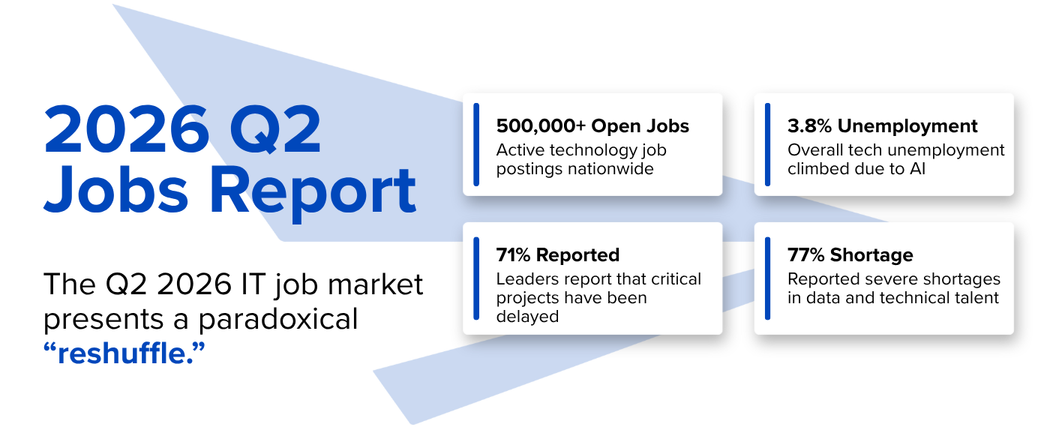
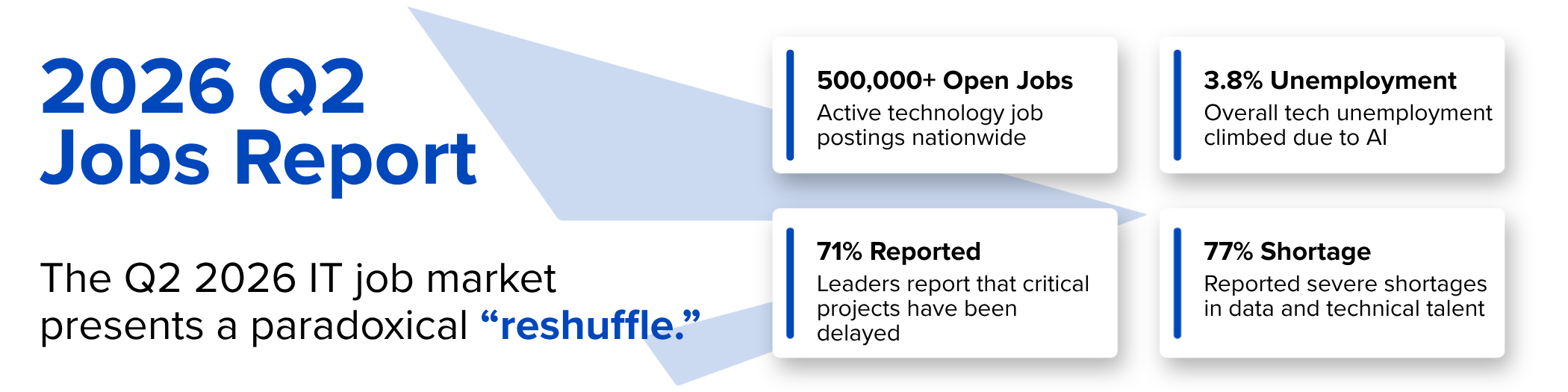
More than 500,000 technology positions remain open. At the same time, tech unemployment has risen to 3.8%. Meanwhile, 77% of organizations report talent shortages, and 71% say critical projects have already been delayed because of skill gaps.
At first glance, these numbers appear contradictory. How can organizations struggle to find talent when so many professionals are actively seeking opportunities?
The answer lies in a labor market that is undergoing a significant transformation.
A Market Rich in Opportunities, Yet Difficult to Navigate
Technology hiring is no longer a straightforward exercise of matching available candidates to available jobs.
Organizations are investing heavily in cloud transformation, cybersecurity, AI adoption, automation, and data-driven decision making. As these priorities evolve, so do expectations for talent.
Roles that existed only a few years ago often require a different mix of skills today. Employers are increasingly looking for professionals who can adapt to changing technologies, collaborate across disciplines, and contribute in environments where AI and automation are becoming part of everyday workflows.
The challenge is not simply filling seats. It is finding people whose capabilities align with where the business is headed rather than where it has been.
That distinction is becoming increasingly important.
Why Skill Gaps Have Become a Business Problem
For many organizations, talent shortages are no longer confined to recruitment teams.
When critical positions remain vacant, the impact spreads quickly.
Projects take longer to complete. Product launches get pushed back. Existing teams absorb additional responsibilities while continuing to manage their own workloads. Strategic initiatives that depend on specialized expertise often slow down while organizations continue searching for the right hire.
This helps explain why 71% of organizations report delays to critical projects.
The consequences of a skills gap are no longer measured solely by hiring metrics. They are increasingly reflected in execution, productivity, and business performance.
A role left open for months affects far more than the hiring manager. It influences the pace at which an organization can innovate, compete, and grow.
The Rapid Evolution of Technology Roles
Artificial intelligence has accelerated this challenge.
Rather than simply creating new jobs, AI is reshaping existing ones. Technical professionals are expected to work with intelligent tools, interpret larger volumes of data, automate repetitive processes, and make decisions in increasingly complex digital environments.
The pace of this evolution has created a gap between demand and readiness.
Educational institutions, training programs, and workforce development initiatives are working to adapt, but technological change rarely waits for talent pipelines to catch up.
As a result, organizations often find themselves searching for capabilities that remain relatively scarce despite a large and active workforce.
Rethinking How Organizations Evaluate Talent
Many employers have responded to talent shortages by raising hiring requirements.
Job descriptions have become longer. Expectations have become more specific. The search for highly specialized expertise has intensified.
While understandable, this approach can sometimes narrow the very talent pools organizations are trying to expand.
Increasingly, forward-thinking companies are placing greater emphasis on learning agility, adaptability, and demonstrated capability. Technical skills remain essential, but so does the ability to evolve alongside changing technologies.
This shift is contributing to the growing adoption of skills-based hiring, where demonstrated competence carries greater weight than traditional indicators alone.
Organizations that embrace this mindset often gain access to talent that might otherwise be overlooked.
What the Data Is Really Telling Us
The Q2 2026 jobs report is not simply a story about labor shortages.
It is a reflection of a workforce adapting to one of the fastest periods of technological change in recent history.
Businesses are redefining roles. Professionals are building new capabilities. Educational systems are working to keep pace with emerging demands.
The friction created by those changes is visible across the labor market.
The organizations that navigate this environment successfully are unlikely to be the ones waiting for perfect candidates to appear. They will be the ones that invest in developing talent, identifying potential, and building workforces that can evolve alongside technology itself.
Because in today’s market, competitive advantage is increasingly determined not by access to technology alone, but by access to the people who can make the most of it.